Lake Wilson is Site of KBN Habitat Project
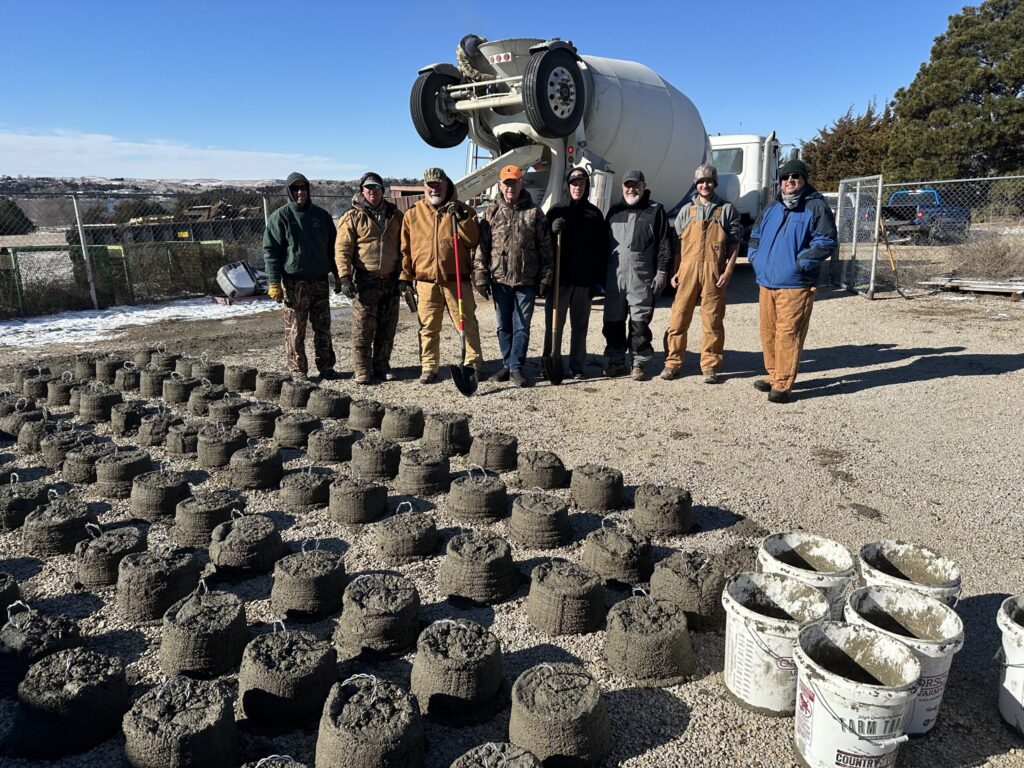
LAKE WILSON (Feb. 23, 2026) – Lake Wilson was one of the sites of Kansas Bass Nation’s (KBN’s) annual habitat projects on Saturday as volunteers from Hays Bass Anglers Association (HBAA) along with other KBN clubs cut cedar trees and assembled Mossback structures to help improve habitat in the western Kansas Reservoir located near Russell, Kansas. The group cut down nearly 100 invasive cedar trees to be used as fish habitat in the reservoir. Volunteers also assembled special Mossback structures for the same purpose. The project, coordinated by KBN, is utilizing both natural materials and plastic structures. “The Mossback structures are specifically designed not to be harmful to the environment and do not contribute to micro-plastic pollution,” said Clayton Rudman, KBN Conservation Director and HBAA club member. The group prepared the materials to be introduced into the lake to provide spawning habitat for fish and to provide protection from predators. Volunteers continued working on the project on Tuesday, Feb 24, by assisting fisheries biologists with Kansas Department of Wildlife, Parks and Tourism, as they placed the habitat structures in the lake.


HBAA partners with KBN for habitat project on Lake Wilson
LAKE WILSON, KS (Feb. 17, 2024) — Members of Hays Bass Anglers Association partnered with members of Kansas Bass Nation to improve fish habitat on Saturday, Feb. 17, 2024, at Lake Wilson. About a dozen volunteers assisted staff and fisheries biologists with the Kansas Department of Wildlife Parks and Tourism in the project to pour concrete anchors and build artificial trees of a new design made from a PVC-like material. “Natural habitat in many of our older western Kansas reservoirs is deteriorating and these structures we are building here today will help replace the habitat that is crucial for adult fish to use as ambush structure and for young fish to utilize for escape cover,” said Clayton Rudman, HBAA’s conservation chairman. The group built more than a dozen of the new artificial tree designs and poured hundreds of concrete anchors used to sink habitat materials into place.